Practice

Want to Become a Better Singer? There’s No Shortcut—You Have to Practise!

The 10-minute habit that can make a real difference to your singing

You have your singing lesson. You learn something new. You leave feeling inspired and excited about your voice.

Then life happens.

School. Work. Family. Dinner. Netflix. Social media. Appointments. And suddenly it’s the day before your next singing lesson and you realise…

“I haven’t practised!”

Sound familiar?

If you want to improve your singing, there is one thing that makes a bigger difference than almost anything else:

Regular practice.

There are no magic exercises, secret techniques or shortcuts that can replace actually using your voice.

Your singing teacher can give you the tools, exercises and techniques you need—but practice is what teaches your voice to use them naturally.

And here’s the really good news:

You don’t need to practise for hours every day.

In fact, 10–15 minutes of focused practice, done regularly, can be far more effective than one long practice session every couple of weeks.

So how can you make practising easier—and actually stick to it?

Here are three simple tips.


1. Make Singing Practice Part of Your Routine

One of the biggest reasons people don’t practise is that they are waiting for the perfect time.

The problem is that the perfect time rarely appears!

Instead of thinking, “I’ll practise when I have time,” choose a regular time when you can fit singing into your day.

Perhaps it’s:

  • Before school or work
  • When you get home
  • Before dinner
  • After your morning coffee
  • Before you go to bed

It doesn’t have to be a long session.

Even 10 minutes counts.

The secret is to make singing practice a habit rather than something you have to constantly remind yourself to do.

Think about brushing your teeth. You don’t usually ask yourself, “Do I feel motivated to brush my teeth today?”

You just do it because it’s part of your routine.

Try to make your singing practice the same.

Small + regular = progress

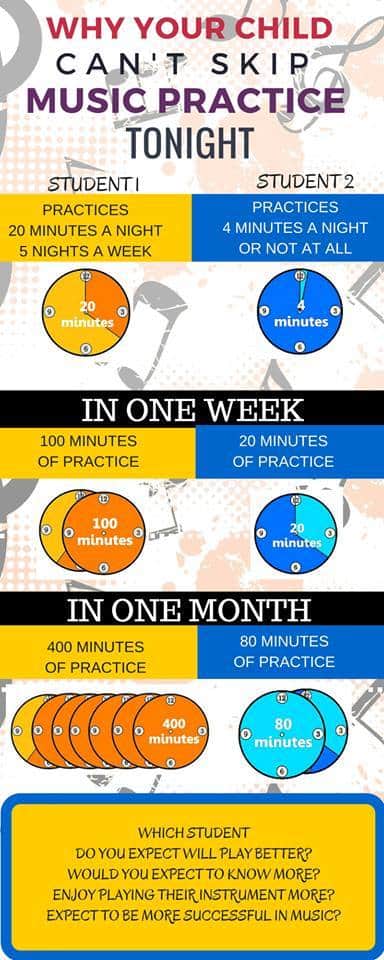
Ten minutes of practice five times a week gives you 50 minutes of focused singing practice.

That’s much better than practising for an hour once every few weeks.


2. Practise What You Need to Improve

There’s a big difference between singing and practising singing.

Singing your favourite song from beginning to end can be fun—and absolutely has its place.

But if you want to improve, your practice needs to be more targeted.

Think about what your singing teacher has asked you to work on.

Perhaps you’re working on:

🎤 Pitch – singing the notes accurately

🌬️ Breath control – managing your breath through longer phrases

🎶 Higher notes – developing strength and confidence in your upper range

🗣️ Diction – making your words clear

😌 Relaxation – releasing unnecessary tension in your jaw, tongue or throat

💪 Vocal strength – developing a stronger, more consistent sound

Rather than simply singing the entire song again and again, spend some time working specifically on the areas that need improvement.

If one particular phrase is difficult, stop and work on that phrase.

Sing it slowly.

Break it into smaller sections.

Repeat it.

Then put it back into the song.

This is how your voice learns.

Don’t practise what you already know you can do!

It’s tempting to spend your whole practice session singing the parts of a song that feel good.

But improvement happens when you spend some time working on the things that are challenging.

Practise the problem—not just the performance.


3. Keep Your Practice Sessions Short and Achievable

Have you ever thought:

“I don’t have an hour to practise, so I won’t bother.”

Forget that idea!

You don’t need an hour.

Try a 10-minute singing practice session instead.

Your 10-minute Singing Strong practice plan

2 minutes – Warm up

Start gently and get your voice moving.

3 minutes – Vocal exercises

Work through the exercises your singing teacher has given you.

5 minutes – Song practice

Choose one section of your song and focus on improving something specific.

That’s it!

If you have more time, fantastic—keep going.

But if you only have ten minutes, you’ve still made progress.

And remember:

Quality beats quantity.

Ten minutes of really focused practice is much more valuable than 30 minutes of singing while you’re distracted, tired or simply going through the motions.

Put your phone aside.

Concentrate.

Listen to your voice.

And give yourself a specific goal for each practice session.


Why Does Regular Singing Practice Work?

Your voice is an instrument—but it’s an instrument that lives inside your body.

Singing involves your breathing muscles, vocal folds, tongue, jaw, posture, hearing and coordination all working together.

Your body needs time and repetition to learn these movements.

That’s why something that feels difficult today can suddenly feel much easier after you’ve worked on it regularly.

You may not notice the improvement from one practice session to the next.

But over weeks and months, those small improvements start to add up.

A difficult note becomes easier.

Your breathing becomes more natural.

Your pitch becomes more reliable.

Your voice becomes stronger.

You become more confident.

And eventually, something that once required a lot of concentration starts to happen almost automatically.

That’s the power of regular practice.


Don’t Wait Until You Feel Motivated

Perhaps the most important thing to remember is this:

You don’t have to feel like practising to practise.

Some days you’ll be excited to sing.

Other days you’ll be tired and would rather do anything else!

That’s normal.

The goal isn’t to have a perfect practice routine.

The goal is simply to keep coming back to it.

Even on the days when you don’t feel particularly motivated, ten minutes can make a difference.

And often, once you start singing, you’ll find that you actually want to keep going.


Your Singing Challenge

Why not try this for the next two weeks?

Practise for just 10 minutes a day.

Choose one thing to work on.

Set a timer.

Put your phone away.

Focus.

And don’t worry about being perfect.

At the end of the two weeks, ask yourself:

Does this feel easier than it did two weeks ago?

You might be surprised at the difference.


Ready to Take Your Singing to the Next Level?

At Singing Strong, singing lessons aren’t just about learning songs. They’re about helping you understand your voice, develop good technique and build the confidence to become the singer you want to be.

Your teacher can show you what you need to work on.

But your regular practice is what turns those lessons into real progress.

So don’t wait for the perfect time.

Start with 10 minutes. Start today.

 

Why am I singing flat?

What are the main reasons people sing flat?

Developing singing skills is just like learning any instrument. To be able to sing on pitch and not sound flat you need to develop your singing technique,

be able to hear whether you are singing on pitch or sounding flat, and you require the confidence, energy and songs suitable for you to sing.

Poor breath support

Without steady airflow, the vocal folds don’t vibrate efficiently, causing notes to sag below the correct pitch.

Signs:

  • Notes start in tune but drift flat.
  • Long notes get lower as they continue.
  • The voice sounds weak or breathy.

Making sure you practice regularly to build good breath support is very important.

Ear training

A lack of ear training can have a lot to do with singing flat.

Sometimes the singer simply isn’t hearing the pitch accurately enough to match or maintain it.

Signs:

  • Difficulty matching a single note.
  • Trouble noticing when singing is out of tune.
  • Better pitch when singing with others than alone.

Your singing is boring

Flat singing can happen when the singer isn’t fully committing to the sound.

This is common with shy or inexperienced singers that aren’t adding enough energy, even when singing softly.

Signs:

  • Singing quietly or hesitantly.
  • Pitch improves when singing confidently.
  • Better tuning during energetic songs.

Song range is too challenging

Trying to sing notes that are too low or too high can make it difficult to maintain accurate pitch.

Signs:

  • Lower notes lose resonance and go flat.
  • High notes become strained and drop in pitch.
  • The voice feels uncomfortable.

Sing like Adele: Easy on me

Today we are going to have a look at a very small section of Adele’s song Easy on me.

We are just going to do the very beginning of the chorus:  Go easy on me baby.

There are a couple of things to look at in this small section of the song.

It’s a great song, and if you haven’t listened to the whole song you can click on this link to listen to it on you tube.

The song is in F major, and this phrase begins with the tonic note, which is the beginning not of the scale -F and then you sing up a fifth, or leap up, which is the fifth note of the scale which is C.

You will find fifth intervals in lots of songs. Intervals are important to practice so that when we sing them, we land accurately on them.

Practice on the sound ng, which is the sound at the end of the word sing. The sound is closed (the tongue and soft palate are together) but you can open your mouth when you sing. This aims the sound into the front of the face.

You want to glissando (slide) up and down.  As you go up, think more like you are landing on the note rather than revving up a hill.


Onsets

When you are attacking a phrase, especially one that begins with a vowel, there are a number of different ways you can sing it.

  1. Clean onset: the vocal chords come together cleanly with the sound to make a smooth, light and clear sound. To do this, connect the two words go-easy, like one word to keep it smooth.
  2. Aspirate/breathy onset. Air is pushed through the vocal chords to make a breathy, airy sound. Adding a h also makes it even more breathy.
  3. Glottal onset. The vocal chords come together quite hard to make a very strong and hard sound.


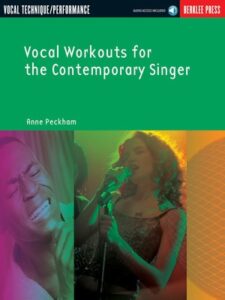
A great book for beginning singers

This page contains affiliate links. If you purchase a product through one of them, I will receive a commission from them (at no extra cost to you). I only ever endorse products that I like, know and trust and have personally used and benefited from.

Thank you for your support.

30DaySinger.com Online Singing Lessons

SINGING PRACTICE

5 Things you can do to improve your singing practice.

You can listen to this blog post here:

5-tips-for-better-singing-practice

As singers, we all want to be able to practice regularly to improve our skills. But sometimes we are not sure about what we need to make our practice sessions worthwhile.  Below you will find 5 tips to help you make the most of your practice time and achieve success.

Tip Number 1:

Make sure you have all the materials you need to practice.

  • Use sheet music when practicing, not just lyrics. We are musicians and should be able to read music.  The sheet music also gives important  clues about things like tempo and dynamics.


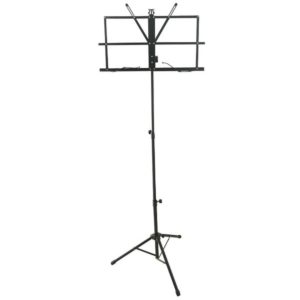
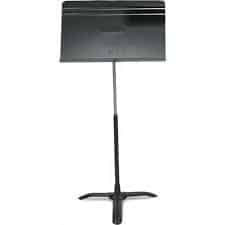
  • Invest in a music stand. It is important you have something to put your music on that you can stand at. You can get collapsible stands that fold away neatly.  I have a manhasset music stand which is more expensive, but is really easy to use and very solid. You can click on the pictures if you want to order them online.

    stand-foldupmanhasset-stand


                              fold away stand                                               Manhasset stand


  • Make sure any device that you use for playing backing tracks is loud enough to sing along with.  You might need to invest in some speakers if you are using an ipad or phone.  Don’t practice using headphones. This is a bad habit to get into as you can’t hear yourself properly.


headphones  Headphones are great for listening to music but not so good for practice.

Tip number 2:

Have a designated place to practice.

  • Have a special, clean, private ready to start in space.  Having a space always ready for singing makes it much easier to get started. If you are always having to pull things out to get started, or have to practice in a space where other people are, you are less likely to get going.

    practice-room

Tip number 3:

Be clear about what you need to practice.

  • Always have a plan about what you want to work on during the week between lessons.  Make sure you have discussed with your teacher what will be required and then have some way to record what you have done. This way you can account for your practice sessions.

Tip Number 4:

Make it part of your routine. EVERY. SINGLE. DAY.

  • Singing practice should be a part of your every day routine.  Just like brushing your teeth or having a shower, we need to find time each day to practice our singing. If you start this from the beginning it is easy to reinforce. For young students, parents really need to be present in the beginning to encourage this routine.  Make a time and stick to it, whether it be in the morning or afternoon. If no time is dedicated to practice, it simply will not happen.

    practice-poster

Tip Number 5:

Warm up, then chunk it.

  • Make sure you warm up well. Have a warm up routine that you can do in about 5 minutes.   Here is a link to a website with some great ideas on warming up. Click here.

  • Don’t try to do it all at once, break it up.  Hopefully your teacher has highlighted what needs to be worked on.  Focus on those small sections and get them correct, then put it all together.

  • A couple of 10 minute sessions each day is much better than trying to do an hour at a time. Committing to 20 – 30 minutes each day is quite achievable – this equates to at least 3 hours practice a week.

Use these five tips you are guaranteed to have success with your singing.  Remember singing is a skill and can be developed like any instrument.  Your success depends on your practice!


a-limited-number-of-places-are-available-for-term-4

Want to have singing lessons? To get started in your musical journey with Mary and Singing Strong please click here and fill in your details.

Mary will get in contact with you to assist you with your inquiry.

Mary Mirtschin

Mary Mirtschin

How to get back into a practice routine

boy singingIt’s the beginning of 2016 and you haven’t practiced any singing since before Christmas.  Does that sound like you? I am a little bit guilty of this too.  The Christmas season was so busy for me I hardly had any time for anything else. It was a wonderful time celebrating with family and friends and I did sing heaps of Christmas carols, but most things like practice got put aside.  Now with the new year we find ourselves back into more of a routine, but finding the motivation to get back into practice can be a bit challenging.

You might want to start by sitting down and writing out a couple of goals for your singing this next couple of months.  My goal at the moment is to come up with a list of ten songs I would like to start learning as I need to build up my repertoire for performance and auditions.
However, it is important that I don’t start singing all these 10 songs straight away. Over this week all I am trying to do is get my voice back in shape.  I need to do my vocal “push ups”. Just like the rest of our body, if we don’t exercise consistently, things get out of shape.  My vocal chords and the surrounding muscles need to get a good work out.
I need to do this slowly, a bit to start with and then lengthen my sessions later on in the week.
So to start I will just do some light warm ups.  Sirens, bubbling lips, humming etc.. through my vocal range. Then some exercises to extend my vocal range and work on my resonance and then get into learning songs.
Starting with 15 –  20 minutes and then gradually increase this time over the week.
Just like the rest of your body,  if you go out and exercise full on straight away, you will most likely be very sore the next day or may even do some damage.  Your voice is the same.  Go slowly and gradually build up your strength and stamina.
Here are a couple of exercises to get you started:

Breathing:


5 note scale on ah:


practice makes perfect