
The joy of singing

There is something truly special about singing. Whether you’re performing on stage, singing in a choir, or simply belting out your favourite song in the car, singing has a way of lifting your spirits like few other activities can.

Singing is more than making music—it’s a way to express emotions, tell stories, and connect with others. It can bring comfort during difficult times, celebrate life’s happiest moments, and create memories that last a lifetime.

Research has also shown that singing can reduce stress, improve mood, and even boost confidence. Every time you sing, you’re not just exercising your voice; you’re giving your mind and body a chance to recharge.

The wonderful thing about singing is that it belongs to everyone. You don’t need to have a perfect voice to experience its benefits. Every singer starts somewhere, and with encouragement and practice, every voice can grow stronger.

So, put on your favourite song, take a deep breath, and sing with joy. Your voice is unique, and the world is a little brighter every time you use it.

Never underestimate the power of a single song—it might just change your day.

Why am I singing flat?

What are the main reasons people sing flat?

Developing singing skills is just like learning any instrument. To be able to sing on pitch and not sound flat you need to develop your singing technique,

be able to hear whether you are singing on pitch or sounding flat, and you require the confidence, energy and songs suitable for you to sing.

Poor breath support

Without steady airflow, the vocal folds don’t vibrate efficiently, causing notes to sag below the correct pitch.

Signs:

  • Notes start in tune but drift flat.
  • Long notes get lower as they continue.
  • The voice sounds weak or breathy.

Making sure you practice regularly to build good breath support is very important.

Ear training

A lack of ear training can have a lot to do with singing flat.

Sometimes the singer simply isn’t hearing the pitch accurately enough to match or maintain it.

Signs:

  • Difficulty matching a single note.
  • Trouble noticing when singing is out of tune.
  • Better pitch when singing with others than alone.

Your singing is boring

Flat singing can happen when the singer isn’t fully committing to the sound.

This is common with shy or inexperienced singers that aren’t adding enough energy, even when singing softly.

Signs:

  • Singing quietly or hesitantly.
  • Pitch improves when singing confidently.
  • Better tuning during energetic songs.

Song range is too challenging

Trying to sing notes that are too low or too high can make it difficult to maintain accurate pitch.

Signs:

  • Lower notes lose resonance and go flat.
  • High notes become strained and drop in pitch.
  • The voice feels uncomfortable.

Pop songs for boys under 10

Teaching boys under the age of  10 to enjoy singing lessons and singing.

  1. Start with Fun and Playful Exercises: Introduce singing through fun exercises that engage their imagination and playfulness. Games like “Simon Says” where they mimic vocal sounds or animal noises can be great warm-ups. Encourage them to sing along to their favorite songs or cartoons, making it enjoyable and natural.
  2. Provide Positive Encouragement: Building confidence is crucial at this age. Offer plenty of positive reinforcement and encouragement. Celebrate their efforts, no matter how small, and focus on progress rather than perfection. Create a supportive environment where they feel safe to explore their voice without fear of judgment.
  3. Incorporate Visual and Kinesthetic Learning: Young boys often respond well to visual and kinesthetic learning. Use visual aids like diagrams of vocal anatomy to explain concepts in a simple and engaging manner. Encourage physical movements that help with breath control and vocal projection, such as stretching or pretending to blow bubbles. Incorporating movement into singing can make it more dynamic and enjoyable for them.

By combining these approaches, you can make learning to sing a fun and rewarding experience, setting a strong foundation for their musical journey ahead.

The following songs are popular, catchy, and have relatively simple melodies and lyrics, making them suitable for young boys to sing along with and enjoy.

Number One: Hound Dog by Elvis Presley

This is a very repetitive song and has a small vocal range, making it very easy for young boys to learn quickly, sing and enjoy.

Number Two: Here comes the sun by the Beatles

Always check the key the song is in and if that key suits the child.  Sometimes you may need to raise the key to make it easier to sing in their vocal range.  Remember, these voices are still immature and they don’t have the vocal chords that an adult male has, meaning they are not yet able to sing really low notes.

Here is the Beatles version, as well as the same song in a higher key.

Number Three: Count on me by Bruno Mars

Number Four: Rip Tide by Vance Joy

Number Five: Kung Fu Fighting by Carl Douglas

Number Six: It’s a good day to have a great day by Russell Dickerson

Number Seven: Can’t stop the feeling by Justin Timberlake

Number Eight: Footloose by Kenny Loggins

Number Nine: Fireflies by Owl City

Number Ten: Lanterns by Birds of Tokyo

Number Eleven: Crocodile Rock by Elton John

Number Twelve: Best day of my life by American Authors

Billie Eilish

Hi! it’s Mary from Singing Strong and welcome.

Today I wanted to talk a little bit about Billie eilish’s new song,  “What was I made for?”  from the Barbie movie. I have not been to the Barbie movie, I haven’t had time to go and see it yet. I’ve had lots of people telling me it’s a great movie and I plan on going to see it, but there’s some great music out of this movie, in particular the song “What was I made for?”

Billie Eilish and her brother Phineas are great songwriters, they are so well versed in using music that appeals to a wide audience.  I respect the work.  I have a personal reason:

One: because I am a soprano and I love to sing higher.

Two: it’s not belted. Everyone talks about belting, we’re going to belt music everything has to be yelled and yes that’s good to a point, but it’s only one feature of the whole voice.

When I first heard the song I was just thrilled that she was using a light soprano voice to sing this song. Now having said that she has made a stylistic choice and I think it has a lot to do with the style of the song,  you know being with Barbie dolls as a child or you know that Barbies,  these were around when I was young, so I think she added all the breath personally,  I think it’s a creative thing of history or nostalgia and looking back.  That’s my interpretation.  When they recorded that, you have to think about what is happening that she has an incredible lot of air over the vocal chords and that is going to challenge you. I would question how many times did she do each section? How long did she have in between the takes.  Did she have breaks for the voice? She could have done it in  only one take, but it would be very taxing on the voice, pushing so much air. You have to remember she’s in front of the microphone, it’s really close and the technology we have now to be able to you know manipulate the sound and create what they wanted to achieve.

Thank you Billie Eilish for encouraging young voices to sing with a high light soprano voice.  Music and singing doesn’t always have to be pushed or belted.

What to sing?

Fun Easter songs for children to enjoy singing

Below are songs, exercises and dances to sing and enjoy as we head towards the Easter long weekend.

Easter Bunny Hop Hop Hop

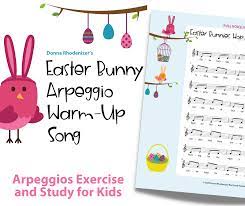
Click on this link  to go to the Full Voice page.  There are links to some singing exercises and the Easter Bunny Hop song.  This is a fun song that works on arpeggios.

A fun song to dance to: The Bunny Hop from the 1950’s

Left kick, Left,

Right kick, right

forward, back, hop, hop hop.

Make a conga line with the family and have fun!

Sing like Adele: Easy on me

Today we are going to have a look at a very small section of Adele’s song Easy on me.

We are just going to do the very beginning of the chorus:  Go easy on me baby.

There are a couple of things to look at in this small section of the song.

It’s a great song, and if you haven’t listened to the whole song you can click on this link to listen to it on you tube.

The song is in F major, and this phrase begins with the tonic note, which is the beginning not of the scale -F and then you sing up a fifth, or leap up, which is the fifth note of the scale which is C.

You will find fifth intervals in lots of songs. Intervals are important to practice so that when we sing them, we land accurately on them.

Practice on the sound ng, which is the sound at the end of the word sing. The sound is closed (the tongue and soft palate are together) but you can open your mouth when you sing. This aims the sound into the front of the face.

You want to glissando (slide) up and down.  As you go up, think more like you are landing on the note rather than revving up a hill.


Onsets

When you are attacking a phrase, especially one that begins with a vowel, there are a number of different ways you can sing it.

  1. Clean onset: the vocal chords come together cleanly with the sound to make a smooth, light and clear sound. To do this, connect the two words go-easy, like one word to keep it smooth.
  2. Aspirate/breathy onset. Air is pushed through the vocal chords to make a breathy, airy sound. Adding a h also makes it even more breathy.
  3. Glottal onset. The vocal chords come together quite hard to make a very strong and hard sound.


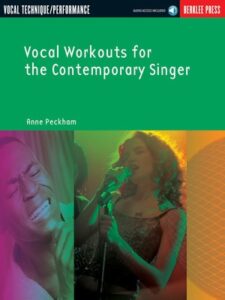
A great book for beginning singers

This page contains affiliate links. If you purchase a product through one of them, I will receive a commission from them (at no extra cost to you). I only ever endorse products that I like, know and trust and have personally used and benefited from.

Thank you for your support.

30DaySinger.com Online Singing Lessons

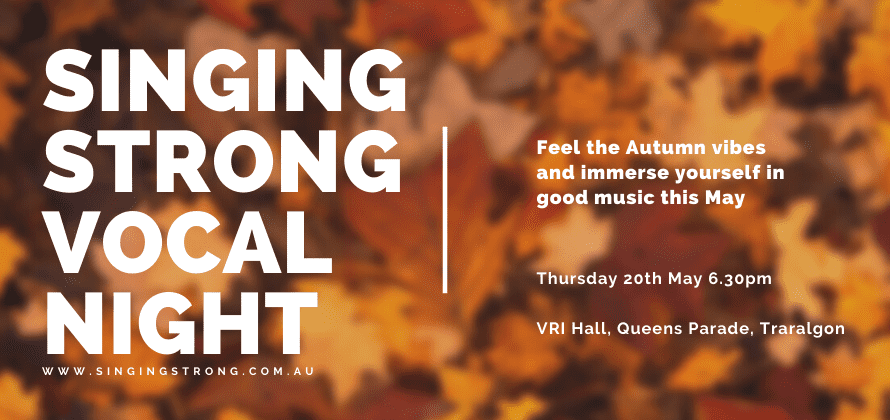
Vocal Night 20th May 2021

It is with great excitement that I can announce the first Singing Strong Vocal Night for 2021.

It has been a long time since we have been able to hold an in person concert and I am so looking forward to

hearing everyone sing.  I am sure you are too.

The performance will be on Thursday 20th May at 6.30pm at the VRI hall, 18/20 Queens Parade, Traralgon.

This is a casual evening, where students are given the opportunity to perform in front of an audience.

Tea and coffee will be available.

Bookings are essential and tickets are online at TRYBOOKING. Click here to book your tickets.

Singers, family and friends must all book a ticket as there is a limit on the number of people who can attend.

There will be a COVIDsafe plan in place.

The tickets are free, but I would ask if you are able,  please make a small cash donation at the door to assist with covering costs.

I look forward to seeing you soon.

Mary

Singing Strong